
Event · 24 Nov 2026
Whoever designs the tools shapes what gets made
A night of Demo & Chill in Copenhagen
Last night at Demo & Chill in Copenhagen, I watched three designers use AI to build tools that make creating things faster and more repeatable.
Two of the demos showed how AI can work with an existing design system to generate product interfaces. Another showed a tool for generating visual variations of orbs and lighting effects, with simple controls for adjusting size, blur, color, and other properties.
Different applications, but a similar idea: instead of manually creating every output, you build a tool that makes it easier for anyone to create, explore, and produce variations at scale.
My first reaction was that designers might be getting automated out of the process. But the more I thought about it, the more I saw something different: when anyone can use these tools to create, the people who design the tools have a much bigger influence on what gets made.
Thank you to Anshuman Dhar, Design Manager at Beyond, Jayden Hanly, Senior Designer at 3Shape, and Ed Orozco, Lead Designer at Trustpilot, for sharing their work.
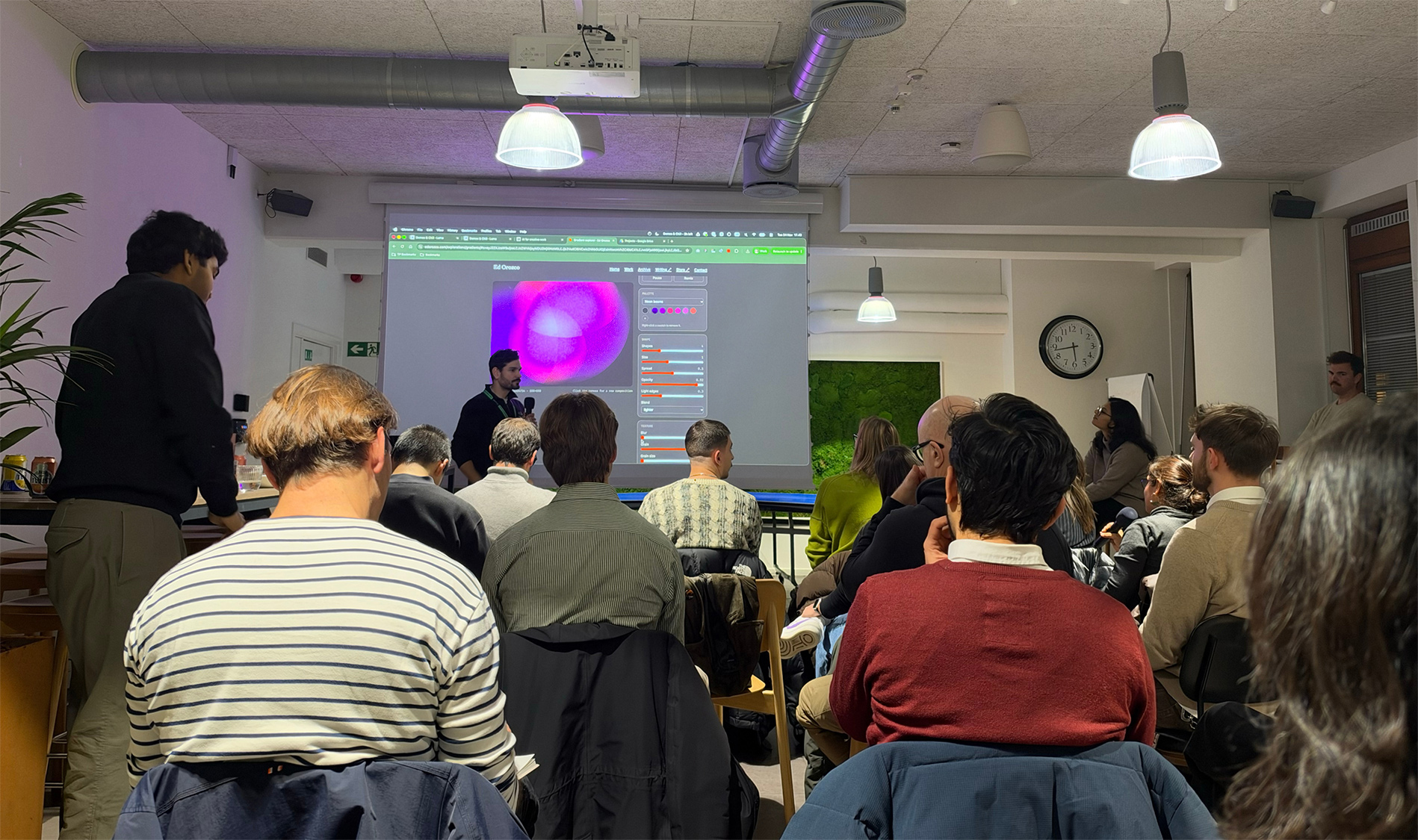
Hosted at Trustpilot’s office in Copenhagen
From making things to building tools
The demos from Beyond and 3Shape showed how AI can connect directly to a team’s design system, with components and code hosted on GitHub. Anyone on the team, whether a PM, designer, or engineer, can describe what they need in a chat box: add a comparison table to the pricing page, update the onboarding copy, or swap the hero image. The tool generates the interface using the actual design system components, with the visuals and code ready to be handed over to developers.
Ed’s demo approached the idea differently. Instead of generating product interfaces, he showed a tool, Gradient Explorer for creating visual assets. By adjusting a few controls, users could quickly generate different variations of orbs, lighting effects, colors, and blur.
What struck me was that none of these demos was simply about using AI to make something. They were about using AI to build tools that make creating something easier, more accessible, and repeatable.
It was genuinely impressive to see.
My first reaction: this feels like a factory
My immediate thought was that this looked like a production factory. A machine turning out deliverables quickly, with surprisingly good quality.
Then came a more uncomfortable question. PMs already sit close to the roadmap, business goals, and customer conversations. If they can turn an idea into a working feature, using the right components and visual language, where does the designer fit?
The tool is only as good as the thinking behind it
After thinking about it more, I realized something about what had impressed me.
The AI didn’t independently decide what the buttons should look like, how the interface should behave, or what visual language to use. Those decisions had already been made by designers and built into the tools.
In the design system examples, the tool was drawing from existing components, tokens, and patterns. In the visual generation example, the tool offered a set of controls and parameters that shaped what people could create.
In both cases, someone had already thought through the possibilities and built the rules that made those outputs possible.
But there’s an important distinction here. A well-built tool can help people create things consistently. It doesn’t necessarily mean they’re creating the right thing.
Take a simple product example: ask the tool to add a discount banner at checkout, and it probably will. The colors, spacing, and components will all be correct.
But should there be a banner at checkout in the first place? Maybe it distracts someone just as they’re about to pay. Maybe there’s already a promo code field earlier in the journey. Every individual element can be perfectly on-brand, while the overall experience becomes worse.
Getting the details right is one thing. Understanding whether those details add up to a better experience is another.
From design systems to systems thinking
This made me think about what it really means to design a system. A design system is the foundation: the tokens, components, interaction patterns, and guidelines that help teams create consistent experiences.
But systems thinking goes beyond the design system itself. It’s about understanding how individual decisions connect, how they influence one another, and what happens when they come together across an entire product.
It’s not just about designing a button, but understanding when an action needs confirmation.
Not just creating an empty-state component, but considering what a first-time user needs to understand and do next.
Not just defining a banner, but deciding when the product should interrupt someone, and when it shouldn’t. And not just making individual features consistent, but making sure dozens of features built by different people still feel like one coherent product.
This is where I think design craft becomes especially important. The ability to simplify complexity, structure information, anticipate interactions, and recognize what makes an experience intuitive doesn’t disappear when production becomes faster. These skills help determine what should be built, how it should work, and whether it actually makes the experience better.
What happens when everyone can make the thing?
We’ve seen something similar before. In the 1980s, desktop publishing tools made it possible for almost anyone with a computer to create a flyer, newsletter, or publication. It didn’t eliminate graphic design. It made production more accessible, while making good design judgment easier to distinguish.
I think AI is creating a similar shift in digital product design. More people can now produce interfaces, prototypes, and visual assets. But the ability to make something doesn’t necessarily mean knowing what should be made. The value of design is moving beyond production and further into judgment.
The part I haven’t figured out yet
There’s one question I keep coming back to. A lot of design judgment comes from making things. Drawing dozens of versions of a screen, adjusting the spacing, trying different interactions, and gradually developing a sense of why one solution works better than another.
If AI starts doing more of that work, how will the next generation of designers develop that instinct?
My current thinking is that we’ll still need to make things, but perhaps more to explore and learn than simply to ship. AI can be a great partner in exploring different directions and making ideas tangible. But someone still needs to evaluate those directions, understand the trade-offs, and decide which one is worth pursuing. I’m still thinking about this, and I don’t have a complete answer.
So, who designs the tools?
I left the event thinking less about what AI might replace and more about who will shape the tools and systems behind it.
As more teams adopt these approaches, there are important questions to consider. Who owns the tools? Who maintains the design system behind them? Who decides which patterns become reusable, when something should be changed, and when a request is better solved outside the system? Without someone looking after these decisions, the tools can end up making inconsistent experiences at a much larger scale.
I think this creates an opportunity for designers to take a bigger role: not just producing interfaces or maintaining components, but shaping the tools, rules, and decisions that influence how products are created and evolve. I’m excited about what these tools make possible. I’ll keep using them, experimenting with them, and paying attention to where they work well and where they fall short.
The interesting question for me is no longer just how quickly we can create something. It’s how we make sure we’re creating the right thing.
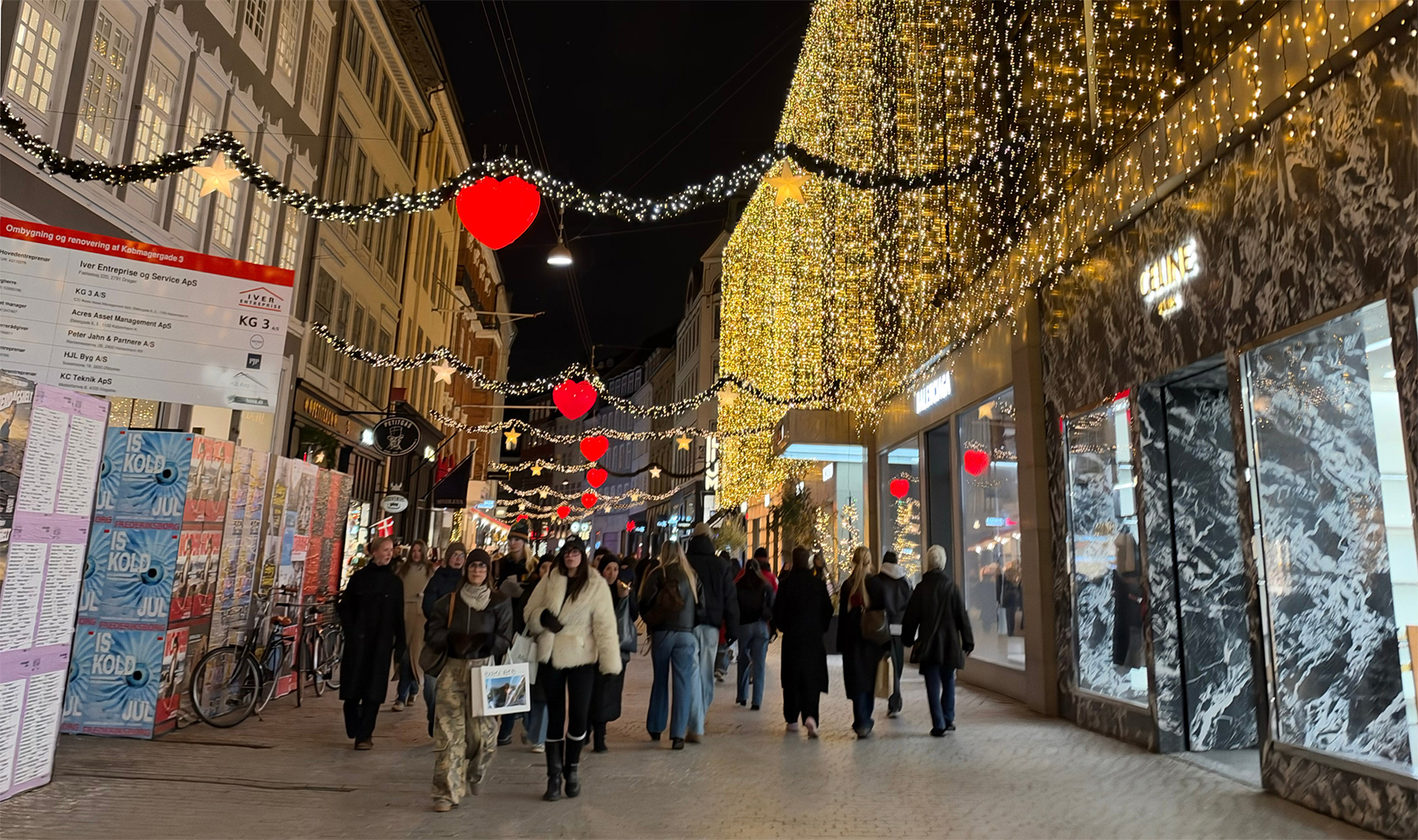
Stepped out after the event into Copenhagen’s Christmas lights