
Event · 11 Nov 2026
At Notion’s Software Factory Debate, the bottleneck was us
An invite-only night
Last Wednesday I spent the evening at Notion’s new office on Market Street for The Software Factory Debate. It was invite-only, and since our team uses Notion, I got lucky and made the list.
First, the office. It feels like a really nice coffee shop, and I wasn’t imagining it: the shared space looks like a Viennese café, bentwood chairs and all. I could have happily stayed and worked there all week.
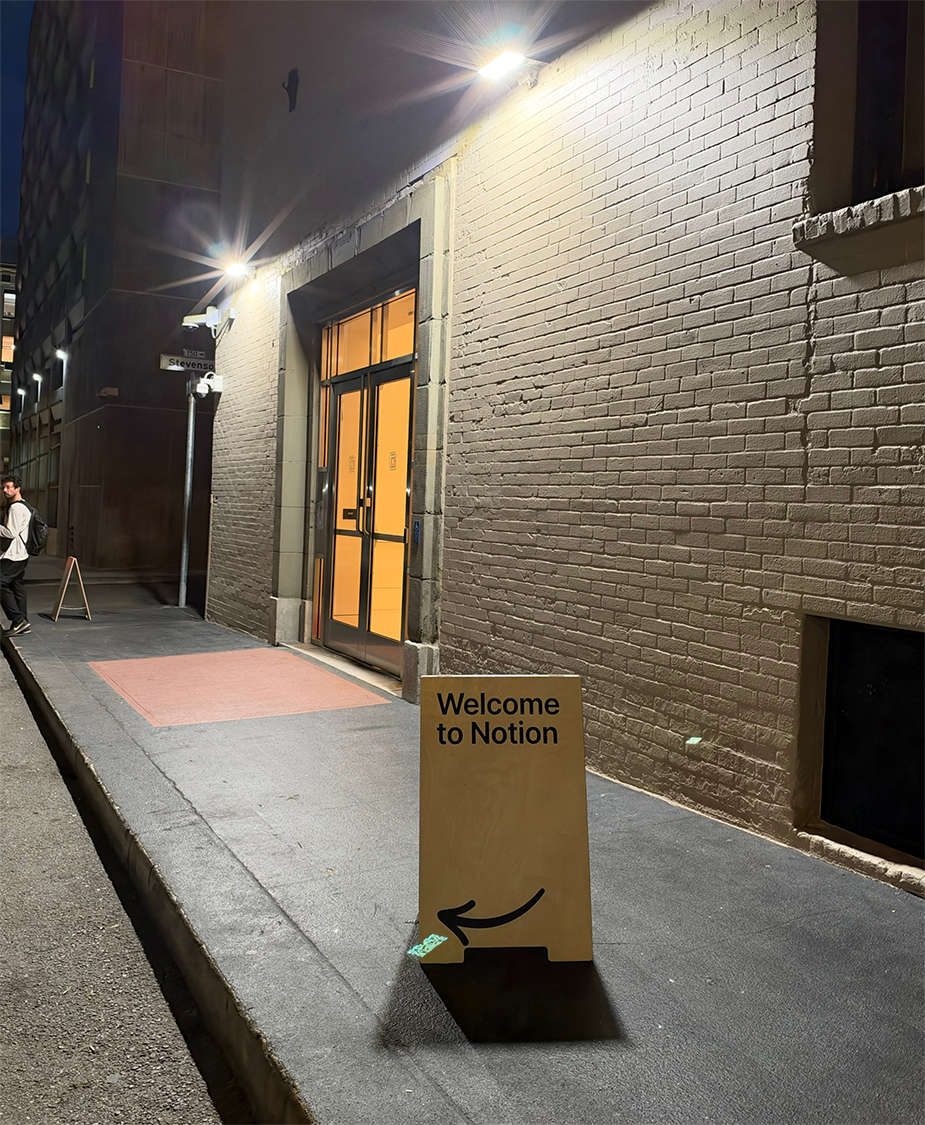
The event sign by the alley door
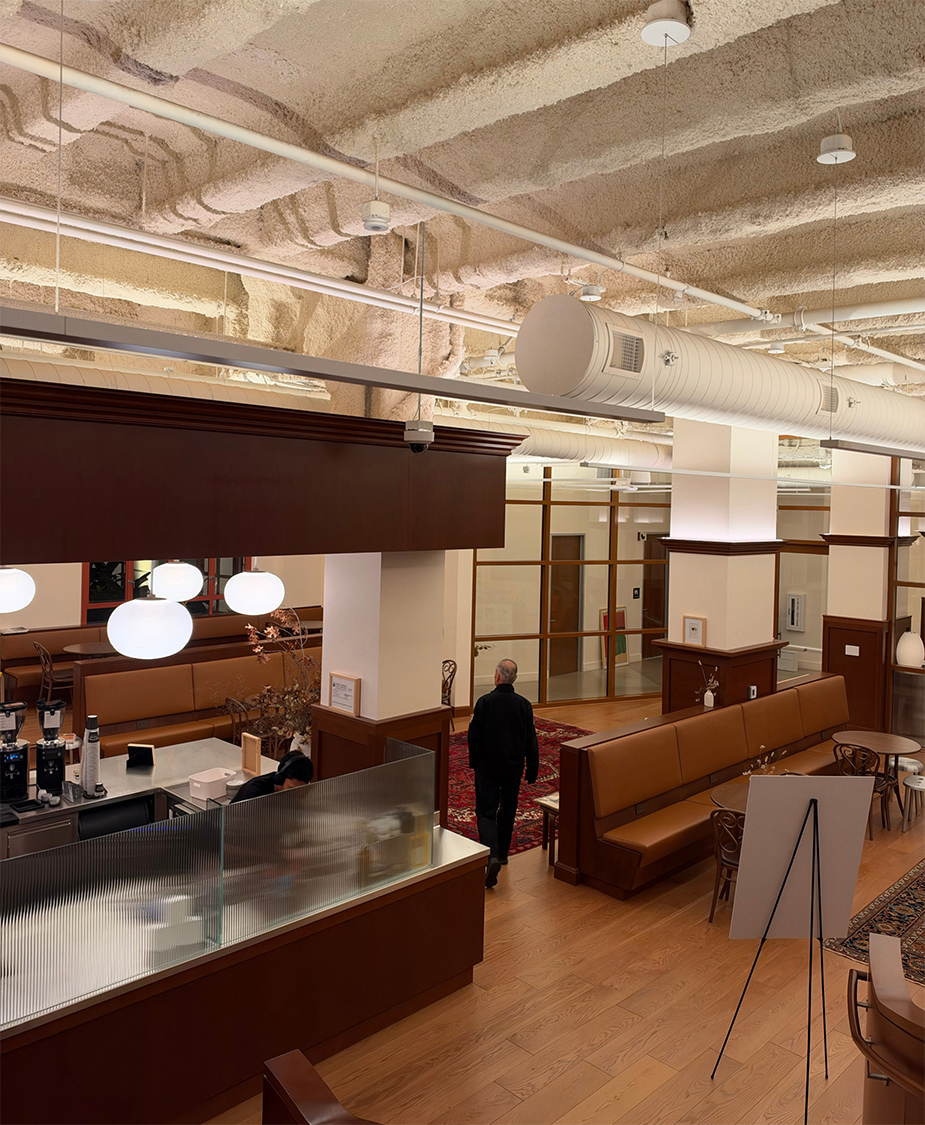
Notion HQ lobby, a.k.a. the nicest coffee shop in town
Okay, so what’s a software factory?
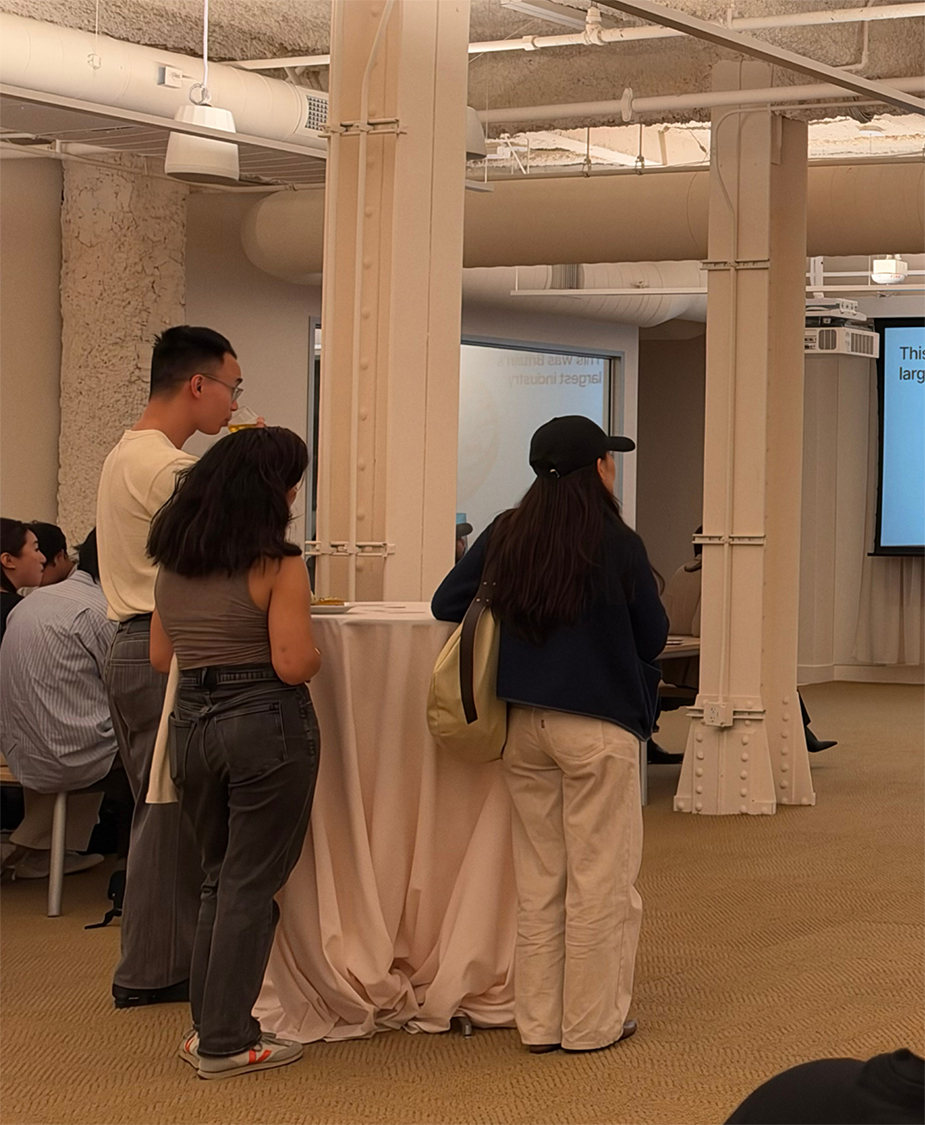
The first hour was just mingling, drink in hand. Then everyone split into small tables of seven or eight to dig into the theme of the night.
I’ll be honest, I learned a couple of new terms that night. A software factory is basically a setup where AI agents plan, build, test and ship software, while people decide what’s worth building and give the final OK. Think a whole team of AI helpers instead of one assistant. And CI (continuous integration) means every small code change gets tested and merged automatically, all day long. Now you know too.
A product designer from Notion walked us through the idea and how Notion could hold the whole flow, from feedback to launch.
Which got me thinking about my own job
Watching a product designer walk through all of this made me think about what product design even means right now. Everyone says designers are wearing more hats, and that night it felt very real. Designing the screens is only part of it. In-house, especially on tech teams, a lot of the work starts to look like product management: framing the problem, deciding what to build first, and keeping things moving between people, and now agents too. And the designers who stand out really know their category, well enough to make the call on what good looks like.
I’m clearly not the only one feeling this. In this year’s AI in Design survey of more than 900 designers, 91% said they use AI several times a week or more, half have shipped AI-generated code, and narrow titles like “UI designer” are slowly giving way to broader ones. The part that doesn’t get automated is the judgment: knowing what to build, and why.
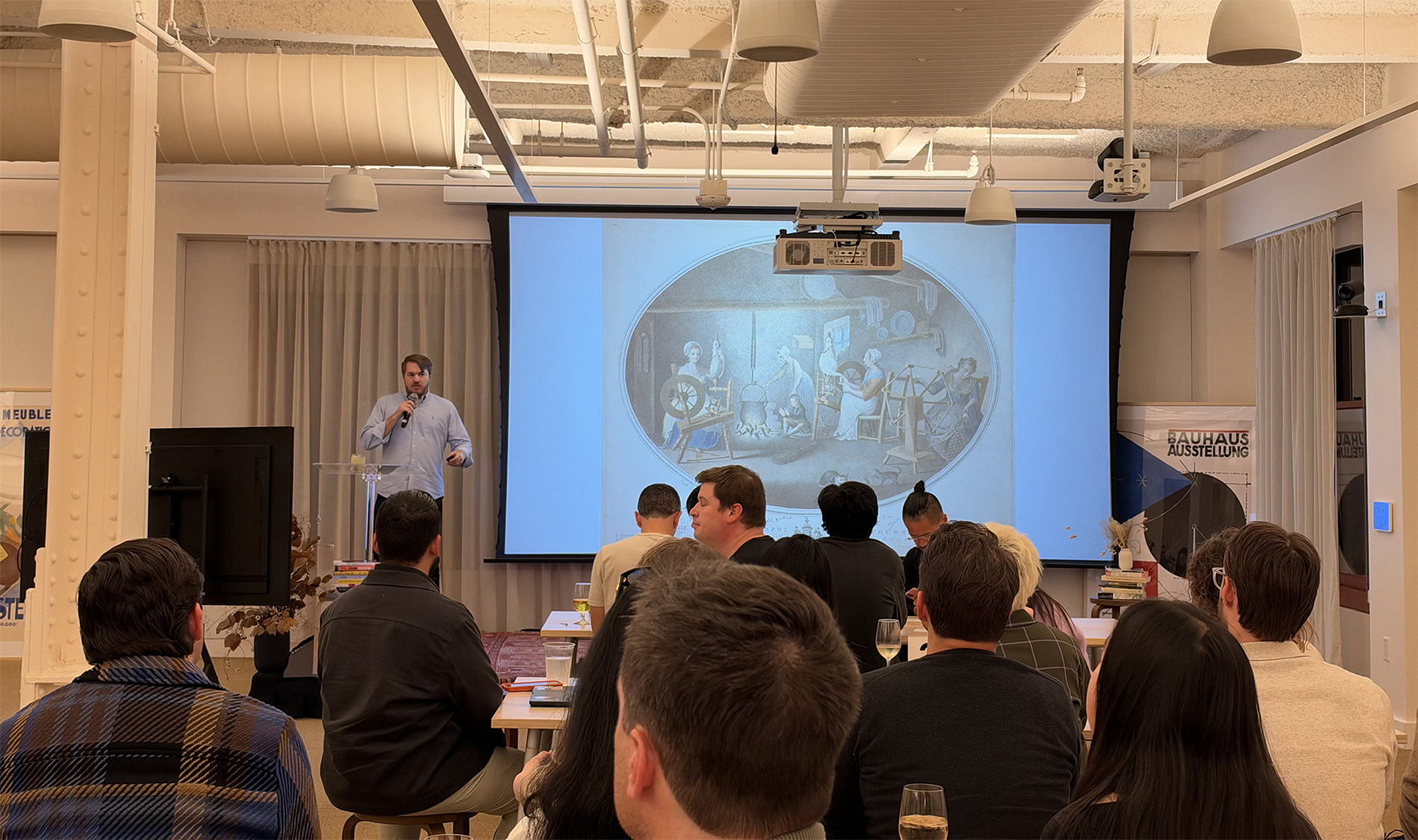
culture slop live!, in hand
My table was the highlight
The talks were good, but honestly my table was the best part. Everyone was working through the same question in a completely different world.
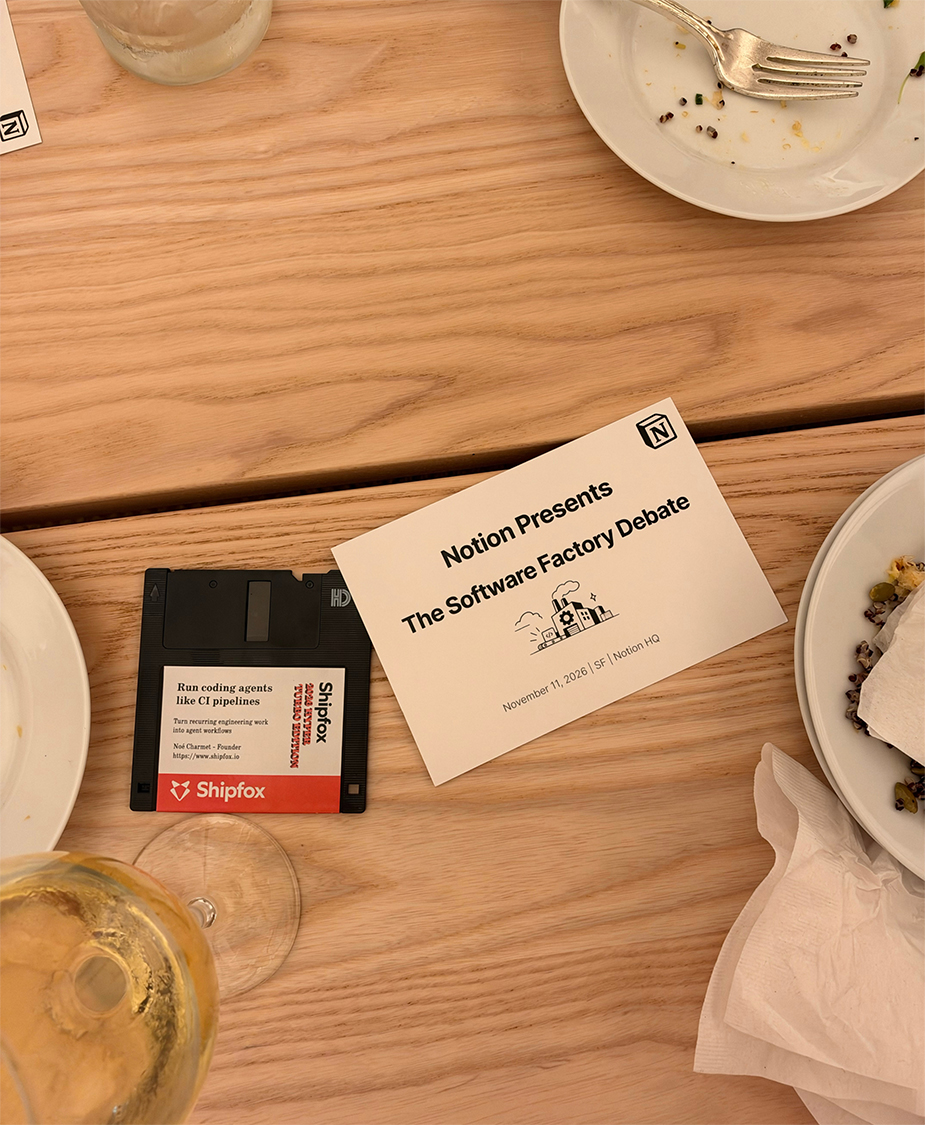
One founder runs an open workflow platform, Shipfox, and he showed us a demo of engineering agents that pick up tickets, fix them and keep going on their own. Next to him was a small business owner who runs more than 20 information booths at SFO. He uses AI agents for payroll, HR and timesheets, which I loved, because that’s about as far from a tech company as you can get. And there was a consultant who helps small businesses figure out where AI can actually help them.
The event sign by the alley door
Notion HQ lobby, a.k.a. the nicest coffee shop in town
Everyone hit the same wall
Every conversation ended up in the same place. The agents can already do a lot. The slow part is still a person approving things: a payroll run, a code change, an email to a client. Most people thought the answer was better rules, set up front, so you only step in when it really matters.
That’s the part I keep thinking about as a designer. Where should an agent stop and ask? And what should it show you, so saying yes takes a few seconds and you still feel in control? That sounds like a design problem to me, and a fun one.
Thanks, Notion, for a lovely night. I left with a few new words, a few new people to keep in touch with, and a lot more questions.